How to Photograph a Model Who Doesn't Exist
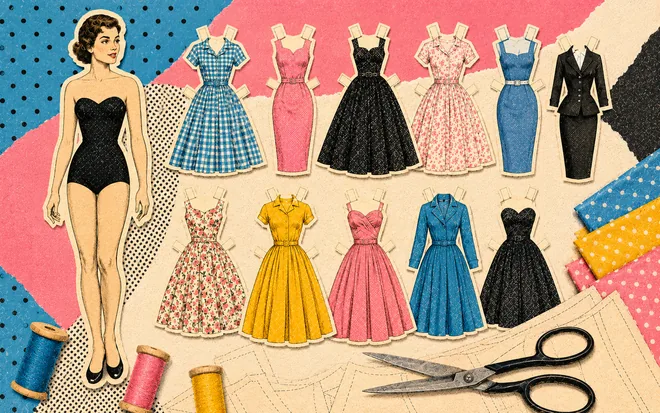
TL;DR
- I bet $100 and a week that AI could stand in for a full apparel photo shoot: the models, the photographer, the set, the post-production, and the copy.
- The real problem was never making a pretty model. A catalog needs many shots of the same thing: each item front and back, in every color, on the same model. In 2024 the tools forgot a face the moment you asked for a new pose, so holding all that sameness was the whole game.
- The fix came from the 90s: model portfolio contact sheets. Pack many angles of one person into a single frame and she stays herself, because one image is always consistent with itself.
- From one stable model I could zoom out to full body, then vary-region in new outfits, colorways, and front and back shots. Canva cleaned up the images; ChatGPT wrote the copy in a Gap and J.Crew voice.
- About $100 and a week, and it looked like a team made it. Current models do subject consistency on their own now, which is the real lesson: the thinking outlasts the tool.
I bet $100 and a week that AI could replace a photo shoot. The job was to showcase an e-commerce platform with a real apparel catalog, the kind that normally takes a clothing collection, models, photographers, a set, a post-production pass, and a couple of copywriters. Here is how it actually went.
The real project was never the photography
Here is the thing that dates this whole experiment, and also the thing that made it worth doing. Back in May of 2024, image models had almost no memory for a subject. You could generate a beautiful model in one picture, and the second you asked for another pose she would come back as a completely different woman, another face, another body, another everything. There was no simple way to tell the machine this exact person again, now turn her around.
So the catalog was never really a photography problem. Anyone can prompt a good-looking model on a white background. The problem was continuity, holding on to the same person across a dozen images and a dozen outfits, and that is exactly the part the tool would not hand me for free.
And a real catalog is greedy for that kind of sameness. Every piece has to be shown front and back so nothing hides, and then again in each color and cut it ships in, because that is how a shopper actually decides. So you are never after one good image, you are after many pictures of the same garment, and many pictures of the same model wearing it, all of them agreeing with each other. The tool fought me on every kind of sameness at once. I tried a handful of generators first, and Midjourney was so far ahead of the rest that the choice made itself, so everything here runs on it.
Where I'd seen this before
So I sat with the limitation for a while. The one thing the models did do well in 2024 was stay consistent inside a single frame. One image of one person was always in agreement with itself, and if two people showed up together they stayed two distinct, stable people. That quietly turned the whole thing into a puzzle. Where in real life do you find many angles of the same person, all in one shot?
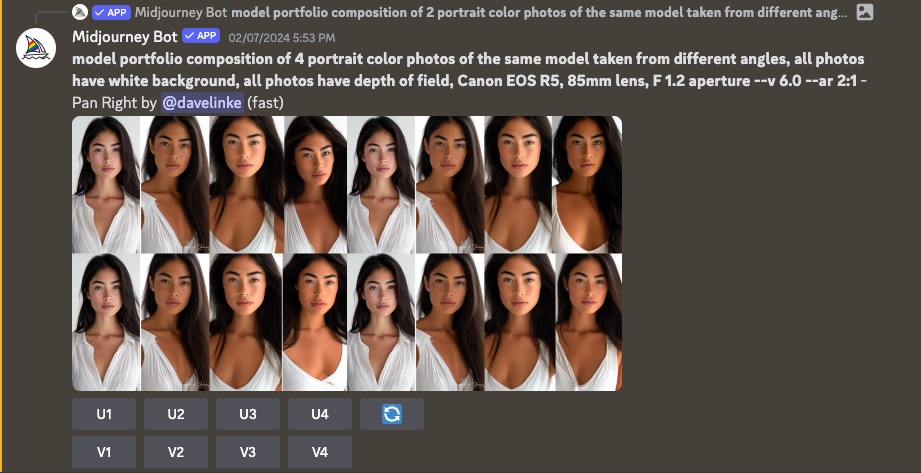
And then it hit me, model portfolio contact sheets. Back in the 90s I worked around models and photographers, and every one of them carried a comp card, that grid of the same face and body shot from every angle, all printed on a single sheet. If I could get Midjourney to build one of those, the model would come out consistent by construction, because the whole thing was one image. That was the unlock.
Making it work
From there it was almost mechanical. I would start with a single clean portrait.
portrait of an apparel female model with a white background, deep depth of field --iw 2 --v 6.0 --ar 1:1
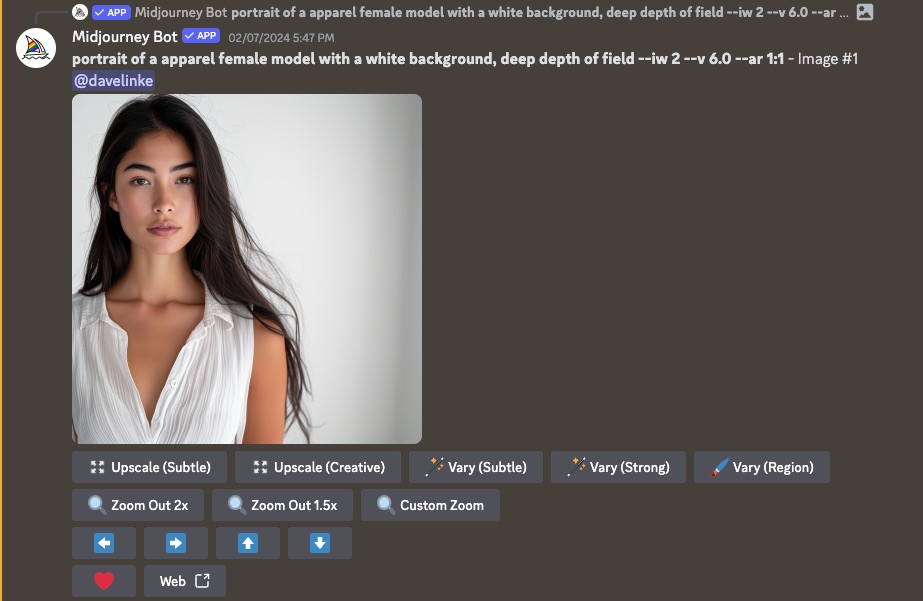
Then I expanded the frame outward with the vary region tool, asking each time for a model portfolio composition, until that one face grew into a full sheet of angles.
Pan Right: model portfolio composition of 4 portrait color photos of the same model taken from different angles, all photos have white background, all photos have depth of field, Canon EOS R5, 85mm lens, F 1.2 aperture --v 6.0 --ar 2:1
Zoom out, pan down, and the same woman is suddenly standing there full length.
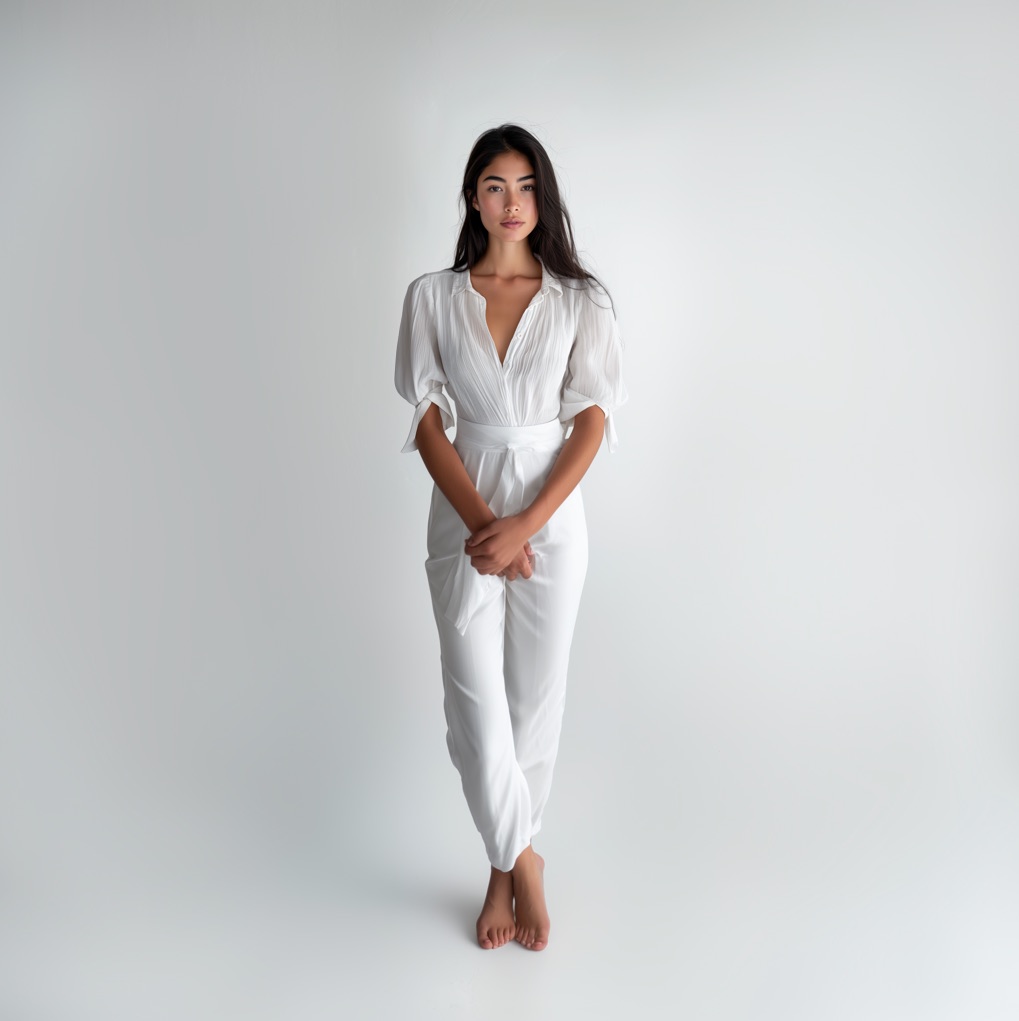
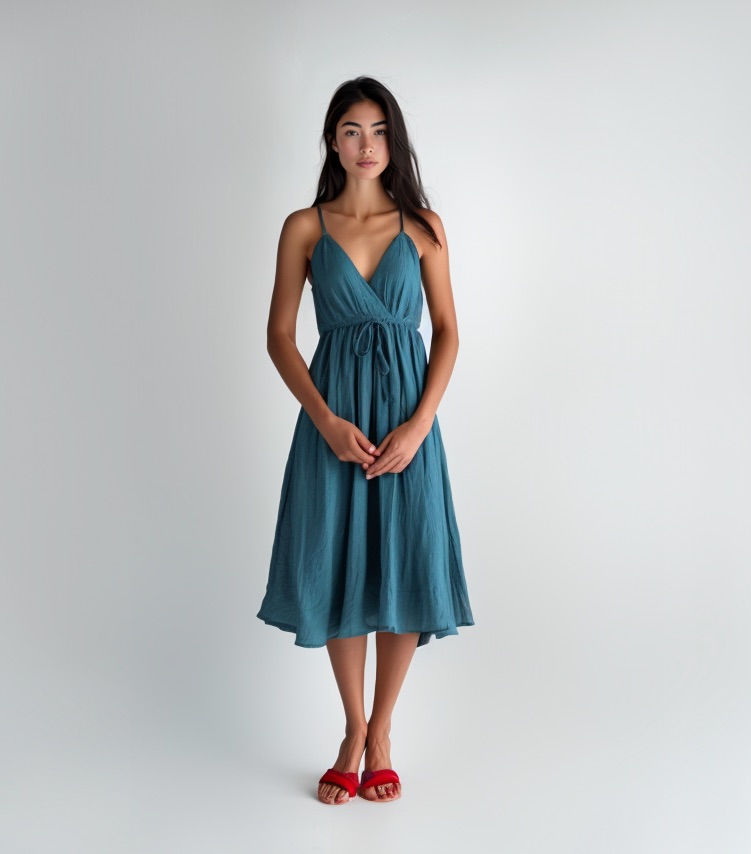
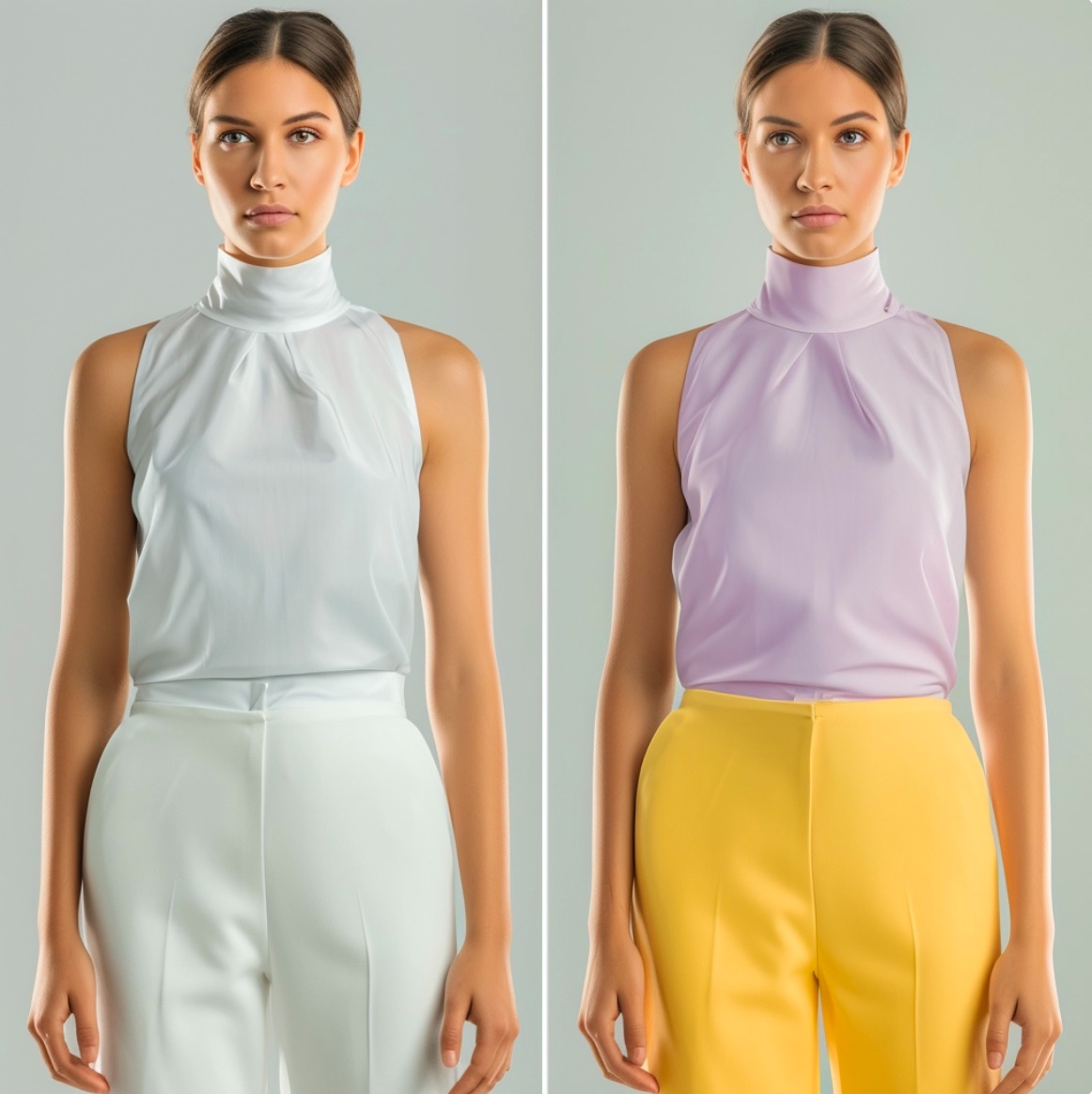
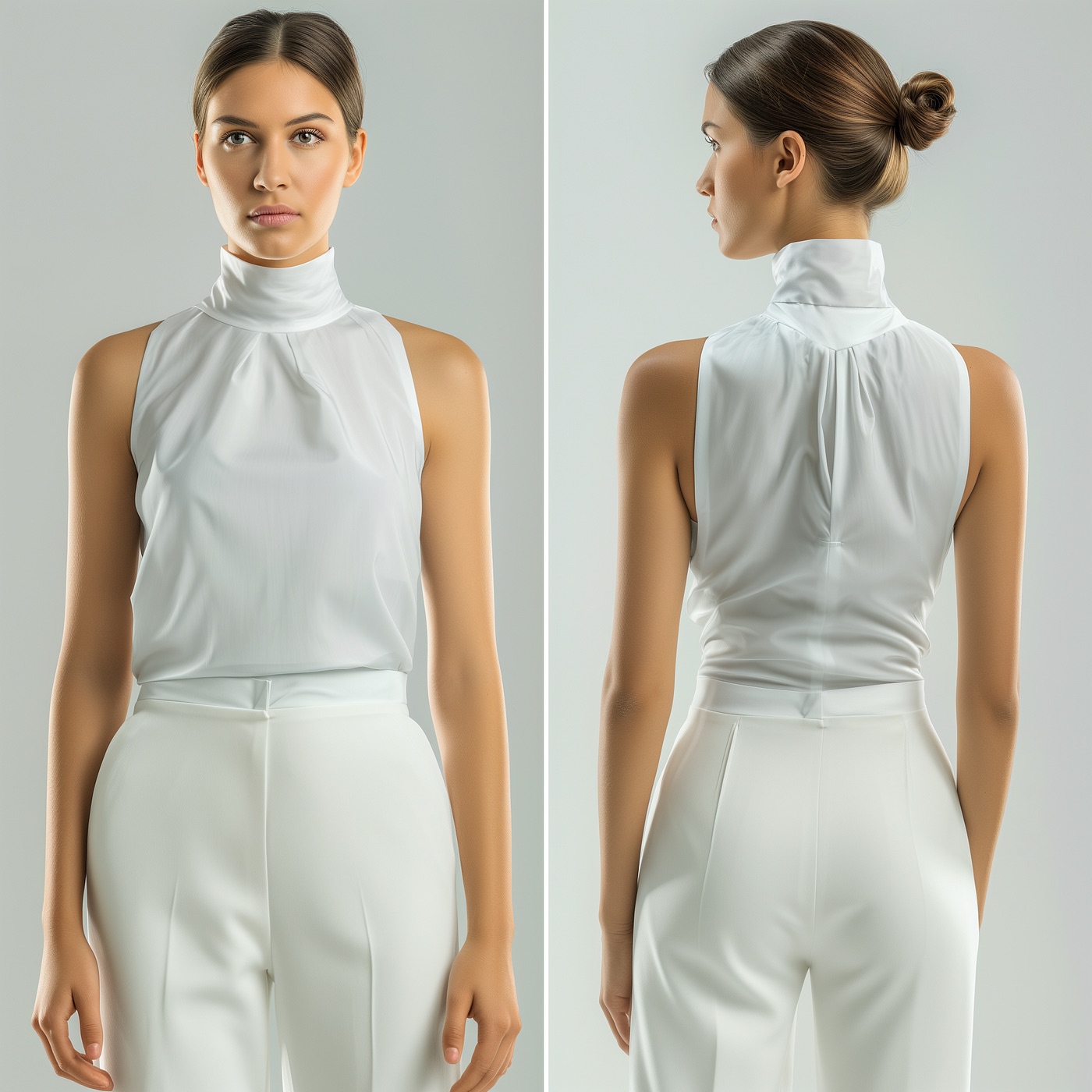
After that the clothes are just another pass. Vary the region, name the garment, and she is wearing a blue summer dress with red sandals, or the same top spun through a row of colorways, or the exact outfit shot front and back, which are the two views every catalog actually needs.
Vary region: apparel catalog photography of a model wearing a blue summer dress with red sandals --ar 3:2 --v 6.0
I did try to cut corners along the way. Seeding from catalogs and photographers I admired got me there faster, but it leaned on other people's work in a way I did not want to ship, so I made myself learn to get the same results from prompts alone.
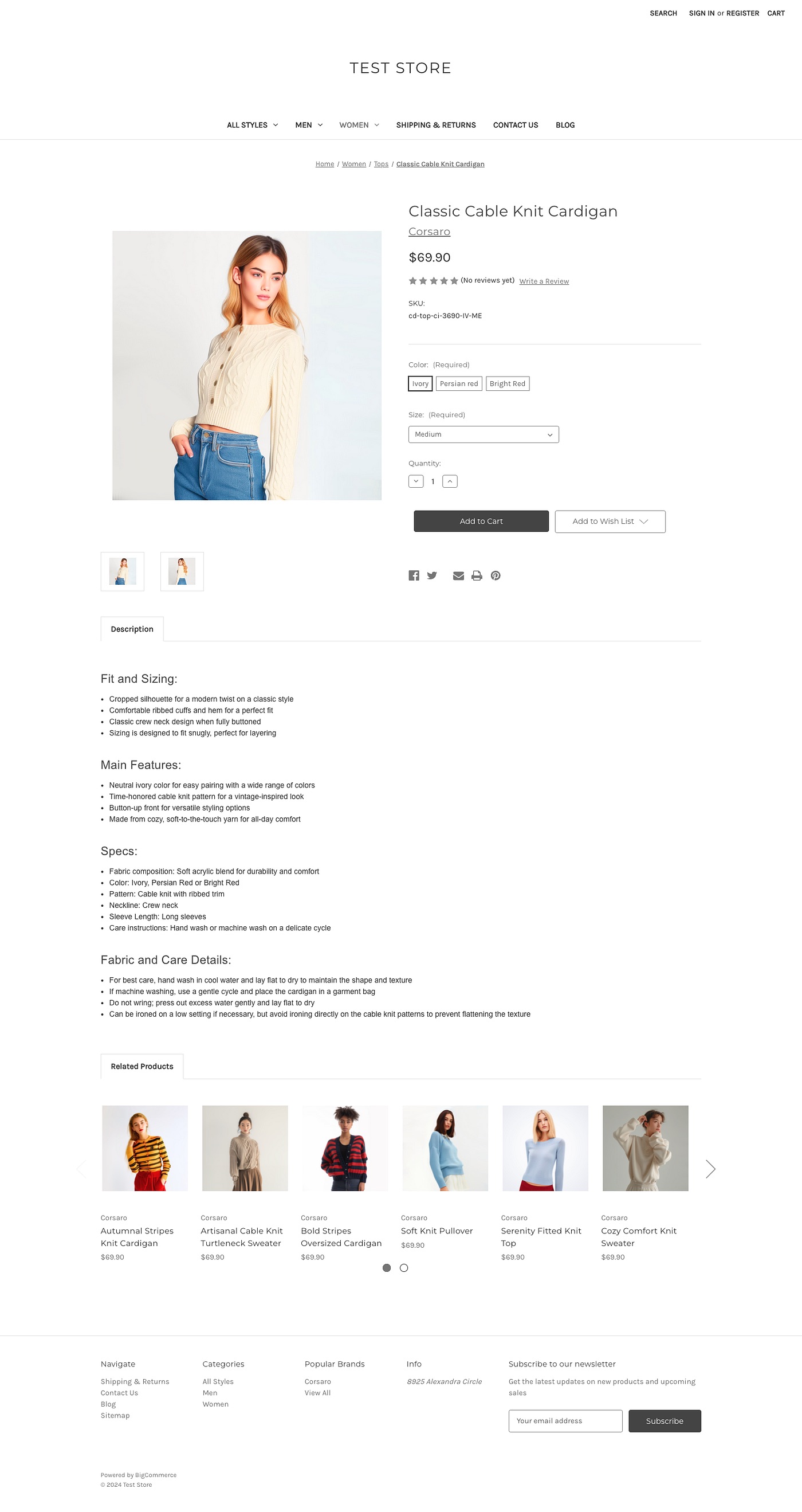
The rest was cleanup and words. The raw images went through Canva's Magic Expand to fill the edges and even out the light, and then I handed the photos to ChatGPT and asked for product copy in the voice of Gap and J.Crew, fit and sizing and care instructions and all. It came back sounding like a brand that had been doing this for a decade.
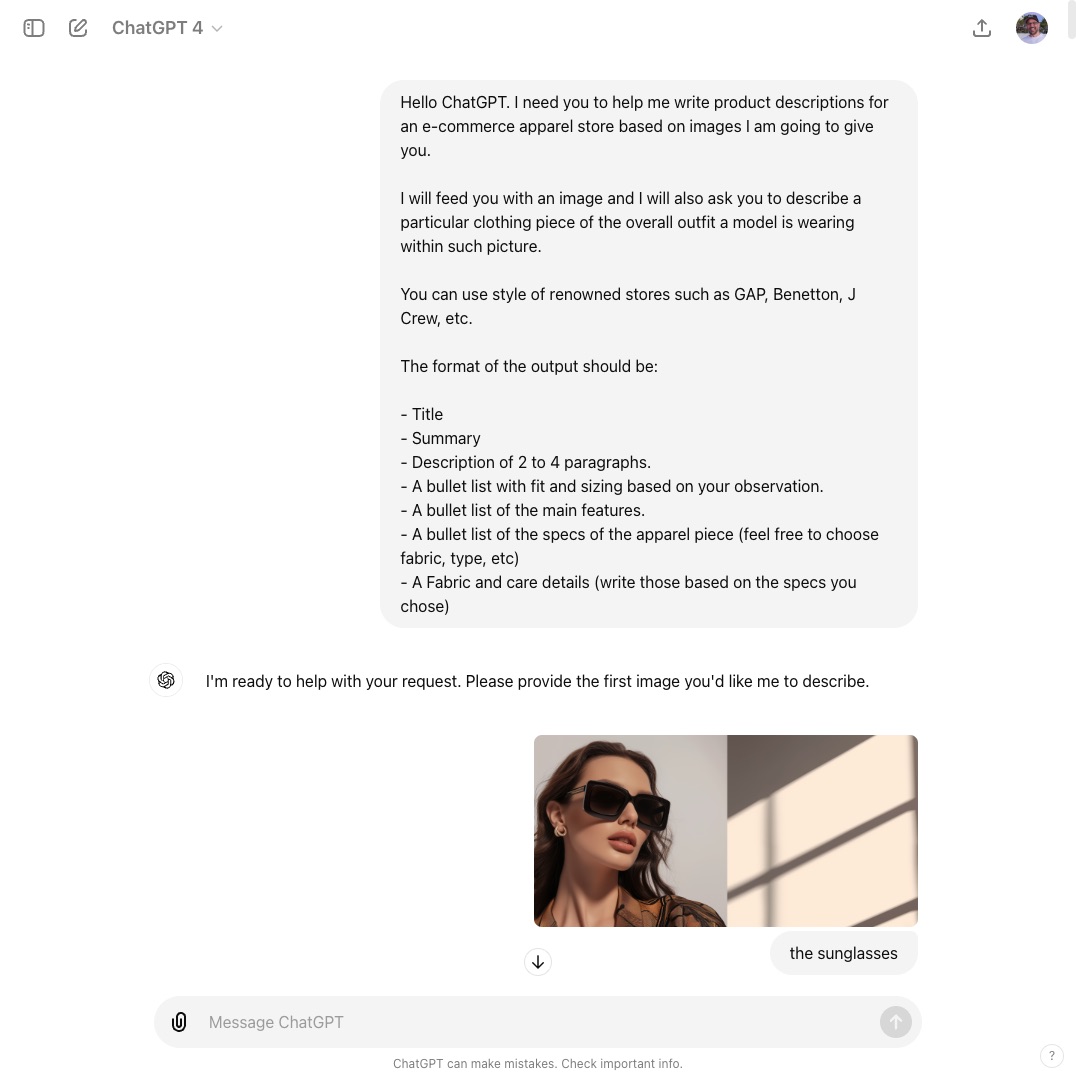
Uploaded to the sample store, the whole thing looked like a team of photographers and copywriters had spent a month on it. It cost about $100 and a week.
The trick outlives the tool
The punchline is that almost none of this is necessary anymore. Point a current model at a reference and it will hold the same subject across as many poses as you care to ask for, no contact sheets, no vary-region gymnastics. A year was all it took for my clever workaround to become a museum piece.
And I think that is the most useful part of the story, not the prompts. The tool changed, the way I beat its limits stopped mattering almost immediately, but the move underneath it did not. When the thing in front of you cannot do what you need, go find the artifact from the real world that already solved the same problem, and borrow its shape. A contact sheet was just one answer. That habit, reaching sideways into how people already work, is the part I keep using, long after the prompts went stale.